A well-maintained vehicle is not just about a clean exterior and interior; the under-the-hood area also requires attention. Engine bay detailing is a crucial aspect of vehicle maintenance that not only enhances the overall appearance but also contributes to the longevity of the engine.
This comprehensive guide will walk you through the importance of engine bay detailing, its impact on vehicle maintenance, and provide a step-by-step approach to achieve a showroom-like finish. By the end of this guide, you’ll understand the benefits of a clean and well-maintained engine bay and how it can positively impact your vehicle’s overall health.
Key Takeaways
- Understand the importance of engine bay detailing for vehicle maintenance.
- Learn how engine bay detailing enhances the overall appearance of your vehicle.
- Discover the step-by-step process for effective engine bay detailing.
- Recognize the benefits of regular engine bay detailing for your vehicle’s longevity.
- Gain insights into the best practices for maintaining a clean and healthy engine bay.
Why Engine Bay Detailing Matters
A clean engine bay is not just about aesthetics; it plays a significant role in the overall performance of your vehicle. Professional engine cleaning can make a substantial difference in how your engine runs and how it looks.
Performance Benefits of a Clean Engine
A clean engine operates more efficiently than a dirty one. This is because dirt and grime can obstruct airflow and insulate engine components, leading to increased temperatures and reduced performance.
Heat Dissipation Improvement
A clean engine bay allows for better heat dissipation, as dirt and debris don’t insulate engine components. This means your engine can run cooler, improving overall efficiency and longevity.
Easier Maintenance and Problem Detection
With a clean engine, it’s easier to spot potential issues such as leaks or worn components. This can lead to quicker maintenance and repairs, saving you time and money in the long run.
Visual Appeal and Vehicle Value
Engine bay detailing near me is a service many car enthusiasts seek to enhance their vehicle’s appearance. A clean engine bay can significantly improve the overall look of your vehicle.
Impression at Car Shows and Sales
At car shows or when selling your vehicle, a clean engine bay can make a great impression. It shows potential buyers that the vehicle has been well-maintained.
Resale Value Enhancement
A well-maintained engine bay can increase your vehicle’s resale value. It demonstrates to potential buyers that you have taken good care of your vehicle, both inside and out.
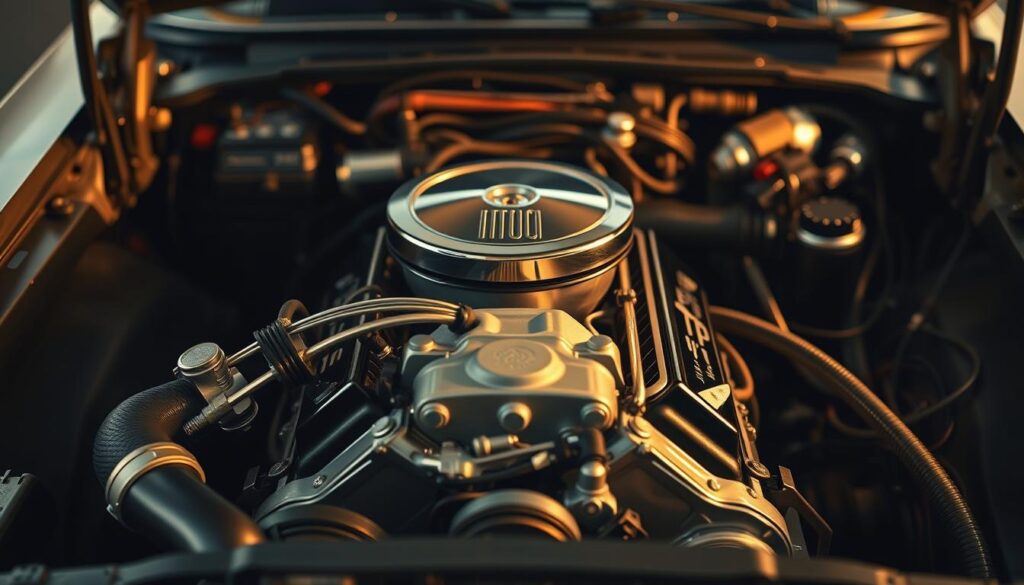
Essential Tools and Products for Engine Bay Detailing
Achieving a clean and protected engine bay involves using the best engine detailing products available. To get started, you’ll need to assemble a selection of essential cleaning solutions, tools, and protection products.
Cleaning Solutions and Degreasers
Effective engine bay detailing begins with the right cleaning solutions. Degreasers are crucial for removing grime and grease.
All-Purpose Cleaners vs. Specialized Degreasers
All-purpose cleaners can be used for general cleaning, but specialized degreasers are more effective for tackling tough grease and grime. A highly recommended option is the Chemical Guys Signature Series Orange Degreaser, known for its powerful grease-cutting abilities while remaining safe on surfaces.
Eco-Friendly Options
For those looking for eco-friendly alternatives, Simple Green All-Purpose Cleaner offers a biodegradable formula that’s effective without harming the environment.
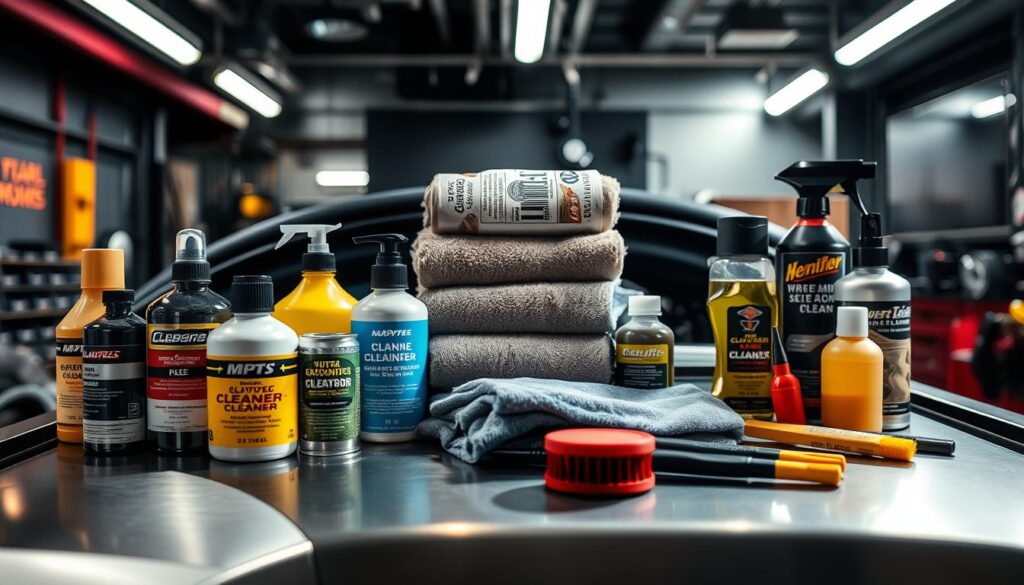
Brushes, Applicators and Microfiber Towels
The right tools are essential for applying cleaning solutions and drying the engine bay. Brushes come in various types, each suited for different tasks.
Brush Types and Their Uses
Soft-bristled brushes are ideal for delicate surfaces, while stiff-bristled brushes are better for heavy-duty cleaning. The Viking Premium Detailing Brushes Set includes a variety of sizes perfect for reaching tight engine components.
Quality Considerations for Microfiber Products
Microfiber towels are a must-have for drying. Look for high-quality, absorbent microfiber products like Meguiar’s Supreme Shine Microfiber Towels to prevent streaks and scratches.
Protection Products
After cleaning, protecting your engine bay is crucial. Protectants help maintain the cleanliness and condition of surfaces.
Silicone-Based vs. Water-Based Dressings
Silicone-based dressings provide a durable, water-repellent finish, while water-based dressings are more environmentally friendly and suitable for certain surfaces. 303 Aerospace Protectant is a popular water-based option that offers excellent UV protection and a non-greasy finish.
Metal Protectants and Sealants
For metal components, metal protectants and sealants help prevent corrosion and maintain appearance. Choose products that are compatible with your engine’s materials.
Safety First: Preparing Your Engine for Detailing
Before you start detailing your engine bay, it’s crucial to take necessary safety precautions to avoid damage or injury. A safe detailing process begins with proper preparation.
Engine Temperature Considerations
Ensure your engine is cool before you begin detailing. A hot engine can cause cleaning products to evaporate too quickly, reducing their effectiveness and potentially leading to damage. It’s recommended to let your engine cool down for at least 30 minutes after driving.
Electrical Components Protection
Protecting electrical components is vital to prevent damage during the detailing process. This includes covering sensitive electronics and disconnecting the battery.
Covering Sensitive Electronics
Use waterproof covers or plastic bags to protect components like the alternator, fuse box, and any exposed wiring.
Battery Disconnection Guidelines
Disconnect the negative battery cable to prevent any accidental starts or electrical surges. Consult your vehicle’s manual for the correct procedure.
Environmental Considerations
Detailing your engine bay can have environmental impacts if not done properly. Be sure to use eco-friendly cleaning products and dispose of any waste responsibly.
| Safety Precaution | Purpose |
|---|---|
| Cool Engine | Prevents rapid evaporation of cleaning products |
| Cover Sensitive Electronics | Protects against water and chemical damage |
| Disconnect Battery | Prevents accidental starts and electrical surges |
Engine Bay Detailing Process: Step-by-Step Guide
A clean engine bay not only enhances your vehicle’s appearance but also contributes to its overall performance. The engine bay detailing process involves several key steps that, when followed meticulously, can result in a like-new engine bay.
Initial Inspection and Documentation
Before starting the cleaning process, it’s essential to inspect the engine bay thoroughly. This step helps in identifying areas that require special attention.
Taking Before Photos
Documenting the current state of your engine bay with photos is crucial. It serves as a reference point to compare with the final result and helps in planning the detailing process.
Identifying Problem Areas
During the inspection, make a note of any stubborn grime, oil leaks, or damaged components. This will guide you in choosing the right cleaning products and techniques.
Pre-Treatment and Degreasing
Pre-treatment involves applying a degreaser to loosen the grime and oil buildup. Choose a high-quality degreaser that is safe for your engine’s components. Apply it according to the manufacturer’s instructions, typically allowing it to sit for a few minutes before rinsing.
Cleaning Techniques
Effective cleaning techniques are crucial for a successful engine bay detailing.
Agitation Methods
Use soft-bristled brushes or detailing brushes to gently agitate grime and dirt, especially around intricate components. Be gentle to avoid damaging sensitive parts.
Working in Sections
Divide the engine bay into sections and clean one section at a time. This approach ensures thorough cleaning and helps in maintaining organization throughout the process.
Rinsing Methods
Rinsing is a critical step that requires care to avoid damaging electrical components.
Low-Pressure Rinsing
Use a low-pressure hose or a spray bottle to rinse off the degreaser and grime. Avoid direct high-pressure jets on sensitive components.
Steam Cleaning Options
For a more thorough clean, consider using a steam cleaner. Steam can effectively remove grime and sanitize the area without using harsh chemicals.
By following these steps and using the right techniques, you can achieve a clean and well-maintained engine bay that enhances your vehicle’s overall appearance and performance.
Tackling Stubborn Grime and Problem Areas
Engine bay detailing goes beyond a simple wash; it involves addressing stubborn grime and problem areas that can affect your vehicle’s performance and longevity. A thorough detailing process requires specific strategies for dealing with tough grime, oil, and grease buildup, as well as restoring plastic and rubber components and addressing corrosion.
Dealing with Oil and Grease Buildup
Oil and grease buildup are common issues in engine bays, requiring a professional engine cleaning approach. Use a high-quality degreaser that’s safe for your engine’s components. Apply the degreaser to the affected areas, let it sit for a few minutes, and then scrub gently with a soft-bristled brush. Rinse thoroughly with water, ensuring all degreaser residue is removed to prevent damage or corrosion.
Cleaning Plastic and Rubber Components
Plastic and rubber components in the engine bay can become dirty and degraded over time. Cleaning these parts requires care to restore their original appearance without causing damage.
Restoring Faded Plastics
For faded plastics, use a dedicated plastic restorer or a UV protectant to revive their color and protect against future fading. Apply the product according to the manufacturer’s instructions, typically using a microfiber applicator to ensure even coverage.
Conditioning Rubber Hoses
Rubber hoses and components benefit from conditioning to maintain flexibility and prevent cracking. Use a rubber dressing or conditioner, applying it with a microfiber cloth. This not only improves appearance but also helps extend the life of these components.
Addressing Corrosion and Rust
Corrosion and rust can be significant issues, especially in older vehicles or those exposed to harsh environments. To address these problems, start by cleaning the affected area with a wire brush to remove loose corrosion. Then, apply a rust converter or inhibitor to halt the corrosion process. For severe cases, consider using a rust-removing product, following the manufacturer’s instructions carefully to avoid damaging surrounding components.
Drying and Detailing Techniques
The drying and detailing phase is where patience and attention to detail pay off in engine bay detailing. Properly drying the engine bay prevents water spots and mineral deposits, while detailing enhances the overall appearance.
Safe Drying Methods
Drying the engine bay requires care to avoid damaging components. Two effective methods are using an air compressor and microfiber towels.
Air Compressor Techniques
An air compressor can be used to gently blow out water from tight spaces. Use a low-pressure setting to avoid damaging sensitive components or dislodging small parts.
Microfiber Drying Strategies
Microfiber towels are excellent for drying larger surfaces. Gently pat the surfaces dry, rather than rubbing, to prevent scratching. For hard-to-reach areas, use a microfiber cloth wrapped around a detailing brush.
Detailing Small Components
Detailing small components can make a significant difference in the overall appearance of the engine bay. This includes cleaning and dressing caps, covers, emblems, wiring harnesses, and connectors.
Caps, Covers, and Emblems
Use a soft-bristled brush and a mild cleaning solution to clean these components. For dressing, apply a suitable protectant to restore their appearance.
Wiring Harnesses and Connectors
For wiring harnesses and connectors, use a gentle cleaning product and a soft brush. Apply a dielectric grease to connectors to prevent corrosion and ensure electrical integrity.
By following these drying and detailing techniques, you can achieve a professional finish in your engine bay detailing project. Consider using the best engine detailing products to enhance your results.
Protecting and Dressing Your Engine Bay
After a thorough engine bay detailing, protecting and dressing the area is crucial for maintaining its appearance and longevity. The cost of engine bay detailing can vary, but the investment in proper protection is invaluable. A well-protected engine bay not only looks better but also withstands the elements more effectively.
Selecting the Right Protectants
Choosing the appropriate protectants for your engine bay is vital. The market offers a variety of products, each with its own set of benefits.
Matte vs. Glossy Finishes
When deciding on a protectant, one must consider the desired finish. Matte finishes are ideal for those who prefer a subtle look, while glossy finishes enhance the visual appeal with a shiny surface.
Heat-Resistant Products
Given the high temperatures that engine components can reach, using heat-resistant products is advisable to ensure durability.
| Protectant Type | Finish | Heat Resistance |
|---|---|---|
| Silicone-based | Glossy | Yes |
| Wax-based | Matte | No |
| Synthetic | Both | Yes |
Application Techniques
Applying protectants correctly is as important as choosing the right product. For the best results, follow the manufacturer’s instructions. Companies that specialize in engine detailing, such as top engine detailing companies, often recommend specific application methods.
Long-Term Protection Strategies
To maintain your engine bay’s condition over time, regular inspections and reapplication of protectants as needed are crucial. This proactive approach ensures that your engine bay remains protected against the elements and continues to look its best.
Professional Engine Bay Detailing vs. DIY Approach
The decision to opt for professional engine bay detailing or a DIY approach depends on several factors, including cost, time, and desired outcomes. When considering the best method for your vehicle, it’s essential to weigh the advantages and disadvantages of each option.
Cost Comparison
The cost of professional engine bay detailing can vary significantly based on location and service provider. On average, you can expect to pay between $100 to $300 for a professional detailing service. In contrast, the DIY approach requires an initial investment in cleaning products and tools, which can range from $50 to $100, depending on the quality and brand.
Time and Effort Considerations
Professional engine bay detailing services can save you a considerable amount of time and effort. These services are typically completed within a few hours, allowing you to use your vehicle sooner. On the other hand, the DIY approach requires a significant amount of time for preparation, cleaning, and detailing, which can be spread over several days or weekends.
Results Expectations
Professional engine detailing services often yield superior results due to their access to high-quality equipment and experienced technicians. They can effectively remove stubborn grime and apply protectants that last longer.
Professional Equipment Advantages
Professionals use specialized equipment that can reach into tight spaces and effectively clean complex engine components, ensuring a thorough detailing.
Experience Factor
Experienced detailers understand the nuances of different engine types and can tailor their cleaning methods accordingly, reducing the risk of damage.
When deciding between professional engine bay detailing and the DIY approach, consider your budget, available time, and the level of detail you desire. For those seeking a high-quality finish with minimal effort, a professional engine detailing service may be the best choice. However, for car enthusiasts who enjoy working on their vehicles and are looking to save money, the DIY approach can be a rewarding experience.
Here are key points to consider when making your decision:
- Cost savings with DIY vs. professional service costs
- Time commitment required for DIY detailing
- Quality of results and longevity of protection
- Access to professional-grade equipment and products
Pro Tip: If you’re leaning toward DIY and want to pick up some time-saving techniques, check out our helpful guide on 10 Quick Car Detailing Hacks You Need to Know — it’s packed with practical tips to make your detailing projects easier and more effective!
Common Engine Bay Detailing Mistakes to Avoid
When it comes to engine bay detailing, avoiding common mistakes is crucial for a successful outcome. A well-executed detailing process not only enhances the appearance of your vehicle but also contributes to its overall maintenance.
Using Incorrect Products
One of the most significant mistakes in engine bay detailing is using the wrong products. This can lead to damage to sensitive components and a subpar finish.
Harsh Chemicals to Avoid
Avoid using harsh chemicals that can damage rubber, plastic, and other materials found in the engine bay. Instead, opt for best engine detailing products that are specifically designed for engine bay cleaning.
Product Compatibility Issues
Always check the compatibility of any cleaning product with the materials you’re about to clean. Using incompatible products can lead to discoloration or damage.
Improper Techniques
Improper techniques can be just as damaging as using the wrong products. It’s essential to follow engine bay cleaning tips from professionals to avoid common pitfalls.
Excessive Water Pressure
Using high-pressure washes can damage electrical components and dislodge important engine parts. Keep the water pressure low to moderate.
Improper Drying
Failing to dry the engine bay properly can lead to water spots and mineral deposits. Use microfiber towels to dry the area thoroughly.
Neglecting Sensitive Components
Some components in the engine bay are particularly sensitive and require special care.
Electronic Control Units
Be cautious when cleaning around electronic control units (ECUs) and other sensitive electronics. Avoid spraying them directly with water or cleaning solutions.
Alternators and Starters
Alternators and starters are also sensitive to water and cleaning products. Take extra care to avoid damaging these critical components.
Maintaining Your Clean Engine Bay Between Detailed Cleanings
To keep your engine bay looking its best between detailed cleanings, regular maintenance is essential. Start by incorporating an engine bay wash into your regular car wash routine. This will help prevent dirt and grime from building up and making the detailing process more manageable.
For those who have invested in professional engine bay detailing, understanding the engine bay detailing cost can help you budget for future maintenance. Regularly inspecting your engine bay and addressing any issues promptly can also help maintain its appearance and overall health.
When performing an engine bay cleaning, use a gentle cleaning product and avoid harsh chemicals that can damage components. Regular maintenance tasks, such as checking and replacing worn-out parts, can also help keep your engine running smoothly and looking great.
By following these simple tips and staying on top of maintenance, you can enjoy a clean and well-maintained engine bay for years to come.