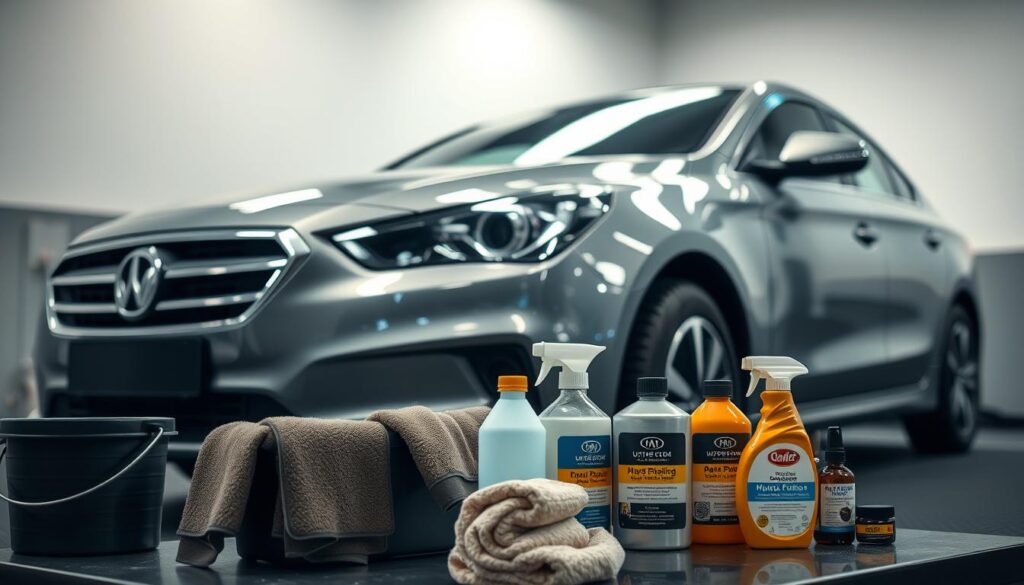
As a professional in the car care industry, I’ve seen many enthusiasts struggle with using a dual-action polisher. With the potential to enhance your vehicle’s appearance and protect its paint, this tool is a valuable asset for any car owner. However, improper use can lead to damage and undesirable results.
Using a car polisher or orbital polisher requires a combination of technical knowledge and practical skill. By understanding the basics and safety precautions, you can achieve professional-level results and maintain your vehicle’s showroom shine.
Key Takeaways
- Understand the basics of a dual-action polisher before use.
- Follow safety precautions to avoid damage and injury.
- Master advanced techniques for professional-level results.
- Regular maintenance enhances your vehicle’s appearance and protects its paint.
- Proper use of a car polisher or orbital polisher is crucial for optimal outcomes.
Understanding Your Dual Action Polisher
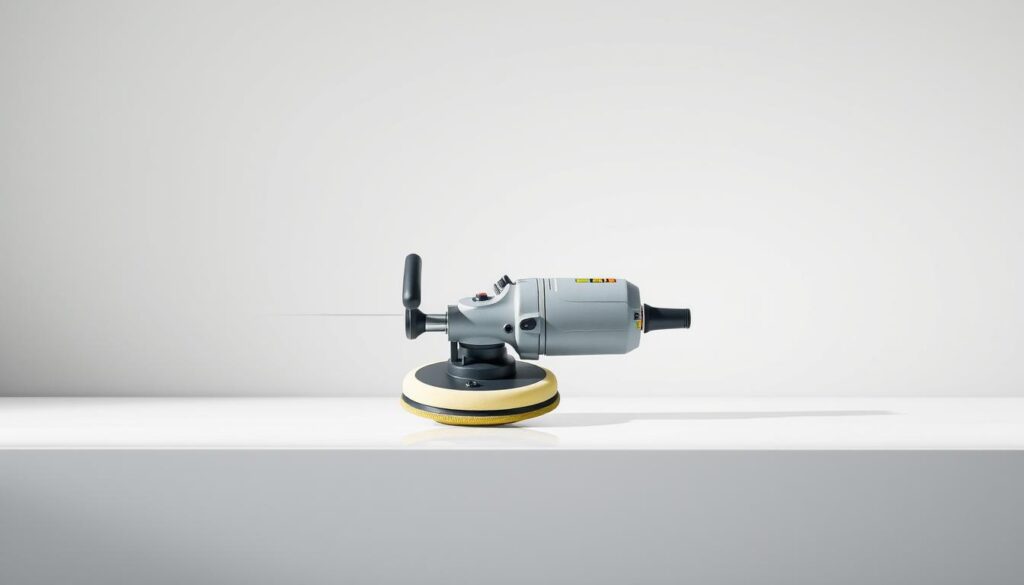
The effectiveness of a dual-action polisher lies in its unique combination of rotational and orbital motions. This synergy allows for a safer and more efficient polishing experience compared to traditional rotary buffers.
How Dual Action Polishers Work
A dual-action polisher, also known as a dual action polishing machine or electric buffer, operates by combining two motions: rotation and oscillation. This dual motion helps in preventing the generation of excessive heat, which can damage the vehicle’s paint. The polisher’s pad moves in a circular motion while also oscillating, ensuring a uniform polish across the surface.
Benefits Over Traditional Rotary Buffers
Compared to traditional rotary buffers, dual-action polishers offer several advantages. They are generally safer to use, as they are less likely to create swirl marks or burn the paint. The table below highlights some key differences:
| Feature | Dual Action Polisher | Rotary Buffer |
|---|---|---|
| Motion Type | Rotational and Orbital | Rotational Only |
| Risk of Paint Damage | Lower | Higher |
| Ease of Use | More User-Friendly | Requires More Skill |
By understanding how a dual-action polisher works and its benefits, you’ll be better equipped to achieve professional-grade results in your auto detailing projects, making it an indispensable auto detailing buffer in your toolkit.
Essential Safety Precautions
Using a car care machine like a dual-action polisher requires careful attention to safety precautions. As an expert in vehicle detailing, I’ve learned that safety should always be the top priority when working with power tools.
Personal Protective Equipment (PPE)
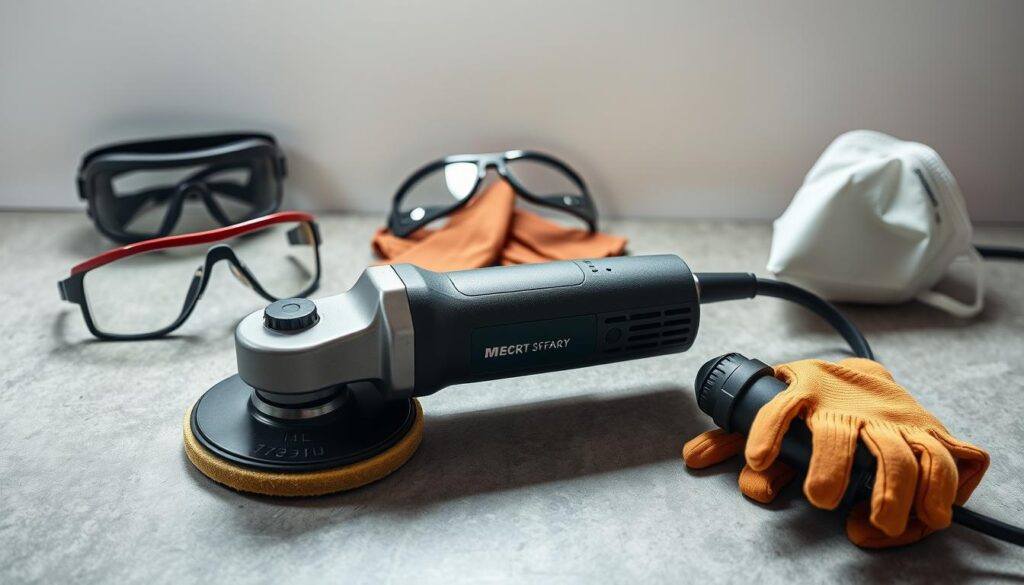
Personal Protective Equipment, or PPE, is your first line of defense against potential hazards. When operating a dual-action polisher, it’s essential to wear appropriate PPE to minimize the risk of injury.
Eye, Ear, and Respiratory Protection
Eye protection is critical to prevent debris from damaging your eyes. Safety glasses or goggles should always be worn. Similarly, ear protection helps prevent hearing damage from the loud noise generated by the polisher. A dust mask or respirator provides respiratory protection, filtering out harmful particles and fumes.
Proper Clothing and Footwear
Wearing the right clothing and footwear is also vital. Avoid loose clothing that could get caught in the machine, and opt for closed-toe shoes to protect your feet from potential hazards. A simple yet effective measure is to ensure you’re dressed in a way that minimizes exposure to potential risks.
Workspace Safety Considerations
Ensuring your workspace is safe and well-prepared is just as important as wearing PPE. Make sure the area is well-ventilated, and clear of any clutter or obstacles that could interfere with your work or cause accidents. It’s also a good practice to keep children and pets away from the workspace.
Preparing Your Vehicle for Polishing
The polishing process begins long before you turn on your dual-action polisher, with thorough vehicle preparation. As an expert in paint correction tools, I’ve learned that the quality of the finish is directly related to how well the vehicle is prepared. In this section, I’ll walk you through the essential steps to get your vehicle ready for polishing.
Washing and Decontamination Process
The first step in vehicle preparation is a thorough wash and decontamination. This process removes dirt, tar, and overspray that can interfere with the polishing process or even damage the paint if not removed. Start by washing your vehicle with a high-quality car shampoo, ensuring you cover all surfaces. For more information on the best car polishing techniques, you can visit this resource. After rinsing, use a clay bar or a synthetic decontamination product to remove any remaining contaminants. This step is crucial for achieving a smooth finish.
Taping and Protecting Trim and Sensitive Areas
Once your vehicle is clean and decontaminated, it’s time to protect the trim and sensitive areas. Use high-quality masking tape to cover emblems, trim, and any other areas you don’t want to polish. For more delicate areas, consider using a trim protection product to prevent damage. This step not only protects your vehicle’s trim but also ensures that your polishing efforts are focused on the paint, resulting in a more effective washing and decontamination process.
By following these steps, you’ll be able to achieve a professional-level polish at home, using your dual-action polisher as a paint correction tool effectively.
Selecting the Right Pads and Compounds
The effectiveness of your paint correction process depends heavily on selecting the appropriate pads and compounds for your DA polisher. With a wide range of options available, understanding the different types and their applications is crucial for achieving the desired results.
Pad Types and Their Applications
Different pads serve distinct purposes in the polishing process. The primary types include cutting, polishing, and finishing pads, each designed for specific stages of paint correction.
Cutting, Polishing, and Finishing Pads
Cutting pads are designed for heavy correction, removing deep scratches and imperfections. Polishing pads refine the paint surface, reducing haze and improving gloss. Finishing pads are used for final touches, enhancing the paint’s clarity and shine.
Foam vs. Microfiber vs. Wool
The material of the pad also plays a significant role. Foam pads are versatile and suitable for most polishing tasks. Microfiber pads offer a softer touch, ideal for finer polishing and finishing. Wool pads are more aggressive and often used for heavy cutting.
Compound and Polish Selection Guide
Compounds and polishes come in various abrasiveness levels, from heavy cut to fine finishing products. For more information on the paint correction process, visit https://glosswise.com/auto-paint-correction/.
Heavy Cut to Fine Finishing Products
Heavy cut compounds are used to remove significant imperfections, while fine finishing polishes refine the paint surface, removing minor scratches and haze.
Matching Products to Paint Types
It’s essential to match your compounds and polishes to the type of paint you’re working with, whether it’s clear coat, single-stage, or ceramic-coated paint. Understanding the paint type ensures you choose the right products for effective correction without damaging the surface.
Mastering Dual Action Polisher Techniques
To get the most out of your dual action car polisher, it’s essential to understand the proper techniques. Mastering these techniques not only enhances the polishing outcome but also ensures safety and efficiency.
Proper Hand Positioning and Ergonomics
Maintaining proper hand positioning and ergonomics is crucial when using a dual action polisher. Hold the polisher with a firm but not overly tight grip, allowing for controlled movement. Keep your arms relaxed and close to your body to reduce fatigue. This stance enables you to maneuver the polisher with precision and maintain consistent pressure.
Movement Patterns and Pressure Control
Effective movement patterns and pressure control are vital for achieving uniform results. Move the polisher in a steady, consistent pattern, typically in overlapping passes to ensure thorough coverage. Avoid applying too much pressure, as this can lead to uneven polishing or damage to the paint surface.
Cross-Hatch Pattern Technique
The cross-hatch pattern technique involves moving the polisher in one direction and then perpendicular to that direction. This method ensures comprehensive coverage and helps prevent missing spots. It’s particularly useful for larger surfaces.
Pressure Management Tips
Managing pressure effectively is key to avoiding damage and achieving optimal results. Let the weight of the polisher do the work; don’t press down too hard. For more information on managing pressure and other techniques, check out this review on dual action polishers.
Speed Settings and Working Time
Adjusting the speed settings on your dual action polisher according to the task at hand is crucial. Lower speeds are typically used for heavier cutting, while higher speeds are better suited for finer polishing. Understanding the appropriate working time for different sections of your vehicle helps in maintaining efficiency and avoiding over-polishing.
| Speed Setting | Application | Working Time |
|---|---|---|
| Low (1000-1500 RPM) | Heavy cutting, removing scratches | Longer, as needed |
| Medium (1500-2500 RPM) | General polishing, defect removal | Moderate, section by section |
| High (2500-3000 RPM) | Fine polishing, final gloss | Shorter, to avoid over-polishing |
By mastering these techniques and understanding the capabilities of your dual action polisher, you can achieve professional-level results and maintain your vehicle’s appearance effectively.
Step-by-Step Polishing Process
Now that you’ve prepared your vehicle and chosen the right polishing tools, it’s time to dive into the step-by-step polishing process. This process involves several key steps that, when followed, will help you achieve a professional-level finish.
Test Spot Evaluation
Before you start polishing the entire vehicle, it’s crucial to perform a test spot evaluation. This involves applying the polish to a small, inconspicuous area to gauge the effectiveness of the product and the polisher. By doing so, you can avoid potential damage to the vehicle’s paintwork.
Sectioning Your Work Area
To maintain efficiency and ensure thorough coverage, it’s essential to section your work area. Divide the vehicle into manageable sections, such as the hood, roof, and trunk. This approach helps prevent missing spots and allows you to work methodically.
Progressive Polishing Approach
A progressive polishing approach is key to achieving the desired results. This involves starting with the least aggressive method and gradually increasing the intensity until you reach the desired finish.
Starting with Least Aggressive Method
Begin with a mild polish and a soft pad to avoid damaging the paint. This initial step helps to remove minor imperfections and prepares the surface for further polishing.
Working Up to Desired Results
As needed, progress to more aggressive compounds and pads, always evaluating the results after each step. This progressive approach ensures that you don’t over-polish or damage the vehicle’s finish.
By following this structured polishing process, you’ll be able to achieve a high-quality finish that enhances your vehicle’s appearance.
Maintenance and Care of Your Dual Action Polisher
Maintaining your dual-action polisher is essential for optimal performance and longevity. Proper care ensures that your tool continues to deliver high-quality results and extends its lifespan.
After each use, it’s crucial to clean your polisher thoroughly. Use a soft brush or cloth to remove any debris or polish residue from the pad and body. This prevents buildup that could affect performance.
Cleaning After Each Use
Remove any polish or compound residue using a suitable cleaning solution. Ensure all parts are dry before storing to prevent corrosion.
Cable and Motor Maintenance
Regularly inspect the cable for damage or wear. Keep the motor area free from dust and debris to maintain optimal performance. Refer to your user manual or visit DetailXperts for more detailed guidance.
Storage Best Practices
Store your polisher in a dry, cool place, away from direct sunlight. Use a protective case or bag to prevent damage.
| Maintenance Task | Frequency | Benefit |
|---|---|---|
| Cleaning after use | After each use | Prevents residue buildup |
| Cable inspection | Regularly | Ensures safety and performance |
| Proper storage | After each use | Extends tool lifespan |
Conclusion
Using a dual action polisher is a significant step in achieving professional-level car polishing results. By understanding how to safely and effectively operate this tool, you can enhance your vehicle’s appearance and maintain its value. Throughout this article, we’ve covered the essential aspects of working with a dual action polisher, from safety precautions to maintenance.
To recap, preparing your vehicle properly by washing and decontaminating the surface, selecting the right pads and compounds for the job, and mastering the techniques of using a dual action polisher are crucial. Regular maintenance of your polisher will also ensure it continues to perform optimally.
With practice and patience, you’ll become proficient in car detailing and be able to achieve a showroom-quality finish. Whether you’re a seasoned car enthusiast or a beginner, using a dual action polisher can elevate your detailing capabilities. By following the guidelines outlined in this article, you’ll be well on your way to mastering the art of car polishing with a dual action polisher.